Thoughts until deciding on a new hospital relocation
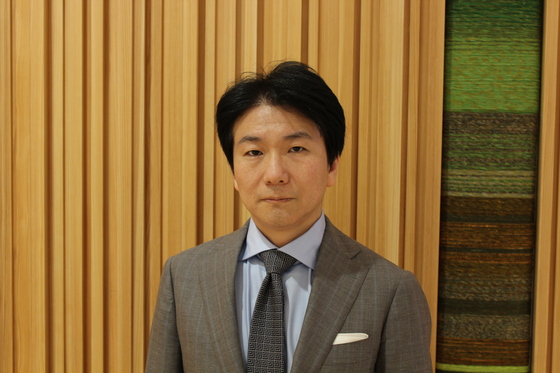
Chairperson Dr. Jun Okawara
"After 45 years of operating a neurosurgery practice in this area, our facility has become increasingly outdated, making it difficult to respond to the changing times. When I returned to the hospital, I considered downsizing, closing, or selling the facility. Despite these challenges, I decided to continue the philosophy of the previous director and build a first-class facility that could provide the same level of medical care as a large city while not failing to meet the expectations of the patients who come to see us."
In May 2016, we interviewed Mr. Jun Ohara, the chairman of the board of directors of the newly relocated Ohagawa Neurosurgery Hospital. Since assuming the position of chairman, the path to the relocation was not without its challenges, including creating a business plan and restructuring the organization.
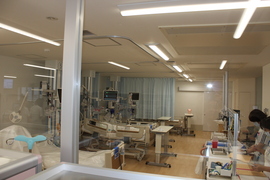
"Compared to the previous ward, the number of beds has decreased, but the total floor area has increased by 1.7 times, making the hospital spacious, starting with the wards. The new hospital features a stroke care unit (SCU), and it is also capable of handling rehabilitation from the very acute stage. We have also equipped the operating room and testing equipment. Additionally, we have carefully considered the amenities for both patients and staff."
They told us that they wanted to specialize in acute care starting from the main hospital, provide thorough rehabilitation, improve patients' ADL as much as possible, and contribute to the community-based comprehensive care system.
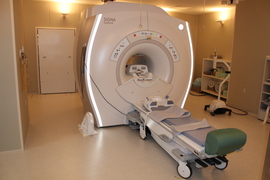
Rehabilitation from the very acute stage is achieved through the stroke care unit (SCU)MRI and other testers chosen for reliability
Contributing to community medicine
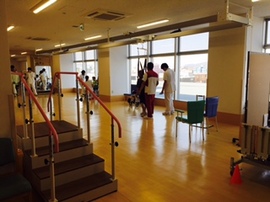
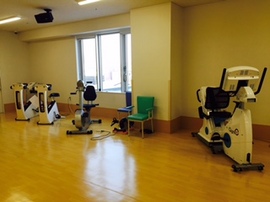
12 m unweighting railCognibike, upright bike, etc.
“I am a person who was born and raised in Muroran. Although a stroke can be fatal, I don’t want to go to a hometown where they say, “If you have a stroke in this area, you have to move to the city.” I believe that providing medical care that can reassure people that they are not alone is a form of social contribution.”
The teacher who shared her thoughts about her hometown where she was born and raised. Muroran City is also at the heart of the "Nishi Iburi Settlement Self-Support Zone" formed in 2010, and she believes that she wants to support the safe and comfortable lives of local residents from a medical perspective.
"In order to further improve the nursing environment, we aim to provide 3:1 nursing in accordance with the facility standards for the SUC, and we have set the target of providing 7:1 nursing in the acute care ward for the fiscal year 2016."
“Previously, there were only about 14 staff members working in the rehabilitation department; however, we have increased the staff to accommodate the start of rehabilitation, and currently we have 47 staff members. I believe that we will be able to provide 365 days of rehabilitation in both the acute and recovery phases by the end of the 2016 fiscal year. It is a well-known fact that acute rehabilitation leads to a faster return to society and improved ADL for patients. To achieve this, we need the strength of many staff members. If we try to achieve this with fewer staff, we will be imposing burdens such as cutting down on vacation time. Neglecting staff will be the same as neglecting rehabilitation. I believe that by considering the work-life balance of staff and allowing them to work with flexibility, we can ultimately benefit the patients,”
By giving staff the freedom to take time off to study in their spare time, it leads to an improvement in the quality of rehabilitation, and the results are then passed on to the patients, according to the doctor. He or she takes a multifaceted approach to rehabilitation, actively working to reduce the number of days a hospitalized patient stays in the hospital.
Staff united as one
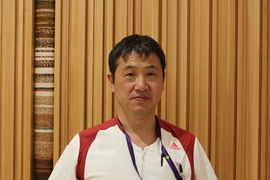
Chief technician Takamichi Tamiya
Work therapy department: I spoke with Mr. Takamichi Tamamiya, the department head.
“Neurosurgery and rehabilitation are inextricably linked. Our desire to focus on rehabilitation was already strong, but in the previous system we lacked manpower. With the addition of staff, we are now on the verge of operating 365 days a year.”
It seems that there was a long process of trial and error before the rehabilitation staff’s education system was established.
“Neurosurgery and rehabilitation are inextricably linked. My desire to focus on rehabilitation was always strong, but in the previous system we lacked the manpower. With the addition of staff, we are now nearing full operational capacity for 365 days of rehabilitation. As for the new employee training system, we have been iterating for over four years, and we have finally been able to launch a curriculum that is rich in content. We are also planning for the education system and training of clinical instructors for the second and subsequent years. Thanks to the understanding of the board, I believe that the fact that we have been allowed to present and participate in many conferences and seminars over the past few years has also played a major role.”
We are providing rehabilitation for a total of 47 people, including 21 PTs, 18 OTs, and 8 STs. The barriers between the occupational fields are extremely low. In fact, there are no designations such as physical therapy or occupational therapy at our hospital, and we also provide PTs and STs to look at eating and walking. In a different sense of specialty, we are also having active discussions about interventions. The enthusiasm and passion of the staff is amazing, but there is still room for improvement in terms of knowledge and skills. With the increasing number of mid-career hires, I think it is a major challenge to how we can become a cohesive team with this number of people.”
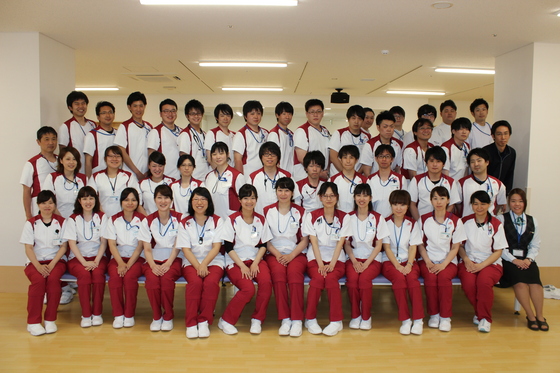
More than half of the fresh staff members are in their first to third year, and they are not bound by years of experience; instead, they actively engage in various activities regardless of their job roles.
All rehab staff
The future of rehabilitation
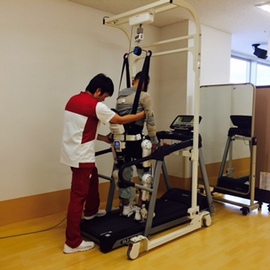
Walking training using the HAL and the unloading device and treadmills
"I think that more and more rehabilitation equipment such as electric stimulators and robots will appear in the future. This does not mean that therapists will no longer be needed; it is more likely that they will be used to visualize interventions and assessments, and to ensure a sustainable and safe training environment. Rather than approaching things as "new things," I want to be actively involved in ensuring that they can be used effectively in the field."
They are also proactively incorporating advanced equipment such as the rehabilitation robot "HAL".
We believe that rehabilitation after a stroke is essential. While it is largely dependent on the individual's motivation, we also want to be a resource that can help even in the smallest way when the environment and the individual or their family are changing.
About future outlook
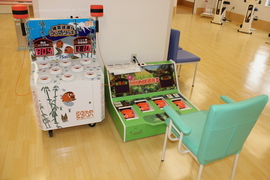
The Rakiri Reha Series "Pig-like Rapid Action" (left) and "Doko-doko Snake Removal II" (right) are popular with a wide range of patients and are said to have a high rehabilitation effect.
"We plan to transition to electronic medical records by fiscal 2020, and further transition to the DPC by fiscal 2021. We will, belatedly, improve the modern medical system. As part of our plan to transition from private hospitals to social hospitals within a few years, we plan to apply for special medical institution status. Depending on the final revisions to the Medical Act and the medical plan, we also plan to eventually convert to a social medical corporation."
Mr. Ohagawa believes that while flexibly responding to medical administration, he would like to continue to contribute as a core hospital that plays an important role in regional healthcare and remains a leading force.
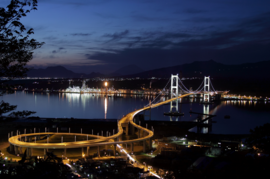
Hakucho Bridge
Located in the southwest of Hokkaido, Muroran City has developed into a central industrial city in Hokkaido, centered on the port, since its opening in 1872. It has also become a key hub for maritime and land transportation connecting Honshu with Hokkaido. The area has relatively low snowfall, with a cool summer and a warm winter. It is a calm and livable climate. There are railways and highways to Sapporo and New Chitose Airport, making access to the city convenient. The area is blessed with abundant nature, and it is not only possible to enjoy fishing and hiking, but also a wide variety of recreational facilities such as golf courses and hot springs. The area is also blessed with abundant fishing resources, and the representative Hokkaido seafood such as chosoy, hair crab, and uni are caught here, boasting the largest catch in the Muroran region. The eight scenic spots that represent Muroran City, known as the "Eight Sceneries of Muroran," are visited by many tourists not only from within Hokkaido but also from far and wide.