Mr. Tsuyoshi Mori, the director of the Mori Orthopedic Rehabilitation Clinic, which opened in August 2016 in this area surrounded by Nishimeita, Kakihata, and residential areas in the western part of Gifu City, has been working to contribute to the community since its opening. Together with his staff, he has been treating patients every day while always putting the community first.
The biggest factor that led me to become a doctor was my father. My father was a chiropractor and I was fascinated by him when I was a child. When I told him that I wanted to become a chiropractor in the future, he told me that if I wanted to become a doctor, I should become one. I became interested in medicine because I had been doing karate since I was little and I often got injured. I think my interest in the musculoskeletal system began because I loved older people and had the desire to help the elderly fix their painful parts.
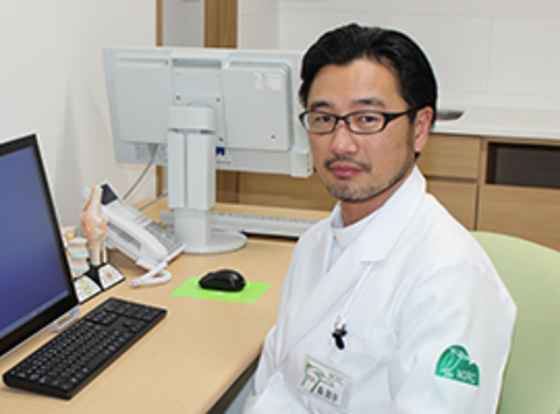
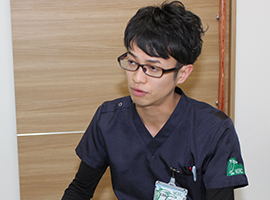
Dr. Atsuyuki Mori speaking with a calm smile.
Providing peace of mind for the community
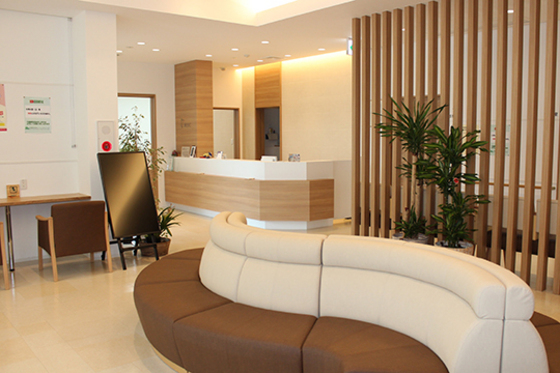
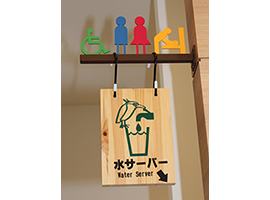
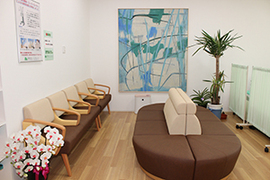
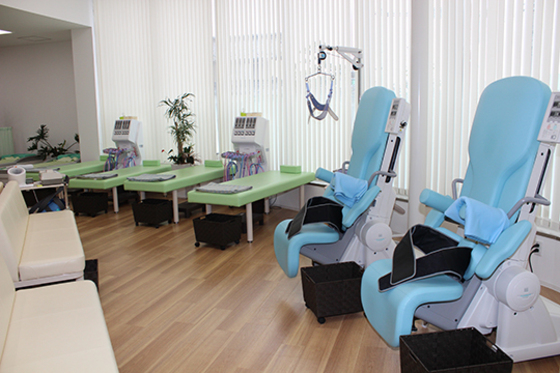
The warm design with wood grain patterns brings a sense of comfort to the patients.A charmingly designed signA spacious rehab waiting room
"We aim to provide a clinic that offers a relaxing and reassuring atmosphere while still being a clinic. I think this is a form of community contribution. Many of the residents in this area are engaged in agriculture. The local fruit of this region is famous: the famous Fuji persimmon is grown year-round with a lot of effort. Even elderly people over 80 are able to work using a ladder, and I was once again struck by how many people are troubled by knee pain."
Providing a sense of reassurance through the clinic and space—this is community contribution. This phrase seems to be a condensed expression of the words of doctors who care about their communities.
As a family doctor
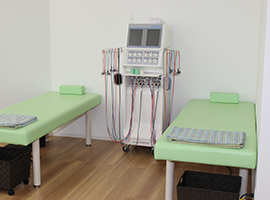
Rehabilitation room with rounded design: The Sedentate Neo low-frequency and interference wave combination treatment device (pictured left). Traction device: Elkin VI and Elkin VI Supreme (pictured right)
"I have worked as a knee joint specialist in many hospitals, especially in orthopedic surgery. Until now, I should have just talked about knee surgery. Now, I think that's not enough. I'm focusing more on how to deal with pain that doesn't seem to get better. I think it's important to be able to talk about things like how to deal with pain that doesn't seem to get better. When I'm asked about things outside of my specialty, such as internal medicine, ophthalmology, otolaryngology, and dermatology, I think it's really important to be able to say, "I recommend you go to this place." I think it's very important to be able to bring together doctors from various fields and gain a broad range of knowledge. I believe that's what community medicine is all about: showing patients a wide range of options and opportunities."
As a family doctor, they still participate in study groups to gain new knowledge so that they can provide appropriate advice to their patients.
Staff who support patients
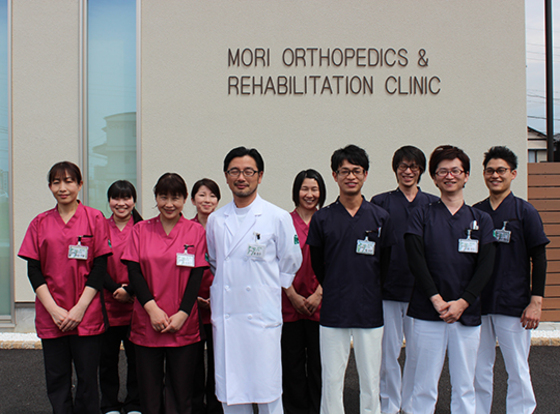
Dr. Mori and all staff
Since everyone is of a similar age, the relationships between the staff are good. There are many people who are connected with staff from previous workplaces, the staff’s sons, and friends, so I feel like it’s easy to get along. What we value most is the morning meeting, where I talk about my feelings and events with all the staff.
I felt that the trust between the staff, including the director, was communicated to the patients as well, and that it led to good medical care.
Rehabilitation and physical therapy
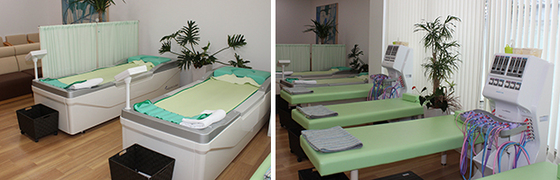
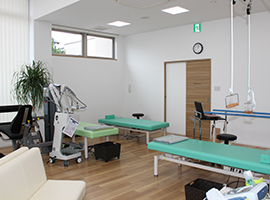
The most popular 3D water massage bed "Aqua Cube" (pictured left) with NMES (neuromuscular stimulation) and Sedentate Neo (pictured right), a low-frequency and interference wave combination treatment device.Space is used for functional training with a treatment bed, parallel bars, reciprocal pulley equipment, and leg extension equipment.SSP combination therapy device "Asteo"
“The rehabilitation room adopted the most open concept. We also made the atmosphere more like a gym, and we introduced equipment that is actually used in gyms. The feedback is good. Physical therapy is actually having a significant effect. Among the physical therapy equipment, the water massage bed is particularly effective. Patients say that this equipment is the latest and best. Another good option is the interference wave therapy device, NMES. We select specific cases to use NMES. The stability is particularly good. We use it to assist patients who are unable to exercise themselves, and it has led to improvements in function.”
The doctor who has been practicing for many years has been exposed to many physical therapy equipment. He understands the characteristics of each treatment device and provides treatment methods that suit his patients. That is why I believe that good results are achieved.
On behalf of the staff
Nurse Yuki Mikamo
On behalf of the nurses, we interviewed Mr. Yukio Tamakami.
"I met the director through working in the same workplace. It was the fact that I had worked in the operating room for seven years that led to our friendship. We have also been friends on a personal level, and when I started the clinic, I was asked to join the team. Since the operations room's work mainly involved assisting the doctors, the way I interact with the patients has fundamentally changed. The important job of a nurse here is communicating with the patients. As I am only a year into my job, I am still learning a lot about how to interact with them."
Ms. Mikado, a nurse who is working with a new sense of responsibility, values the communication with her patients.
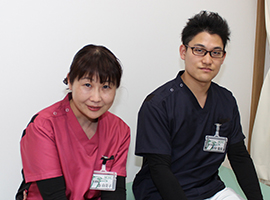
Nurse Yumi Ko (pictured left) and Physiotherapist Yoichi Noda (pictured right)
On behalf of the rehabilitation staff, we interviewed Dr. Yoshinobu Noguchi, a physical therapist, and Ms. Yumi Mori, a nurse and the wife of the director of the hospital.
"Patients can feel anxious and may not be able to express their needs clearly even when they are in pain. Now that I know what they are thinking and what they need, I try to be cheerful and loud in my voice to become a mood maker."
It seems that physiotherapist Noda is very much admired by his patients.
"I had no experience working at a university hospital, and my involvement with rehabilitation was limited to picking up patients from the hospital's ward. I also worked in the orthopedic ward, but I had no knowledge of rehabilitation at all. Now that I've started rehabilitation, I understand the importance of physical therapy. Pain is very debilitating when it persists for a long time to the point where you can't bear it. I believe it's important to make time for patients to be as comfortable as possible when they visit the clinic."
All the staff, including the director, are providing care with the patient’s needs in mind. I feel that this is the result of providing medical care that is rooted in this region.
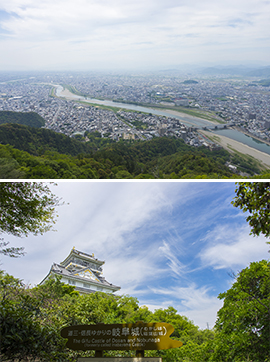
View of the city of Gifu and the Nagara River from Kinugawa Mountain (top photo) Gifu Castle associated with Oda Nobunaga (bottom photo)
Gifu City, located in the center of Japan, is the prefectural capital of Gifu Prefecture and a city filled with nature, with the clear-flowing Nagara River running through the city center and the lush Kikan Mountain towering above it.
In the Sengoku period, the former city of Gifu located at the foot of Kinugawa Mountain flourished as a castle town of Saito no Michizane and Oda Nobunaga, and in the Edo period it became a fief of the Owari clan under the direct control of the shogunate, and the Gifu magistrate's office was established. Gifu flourished as a center of commerce and industry, consisting of forty-four towns, and the southern former city of Kanazawa prospered as a station town of Nakayama no Jukyo, the castle town of the Kanazawa clan.
It boasts a 1300-year history and is known as a historical town for its longan river eel festival and the Gifu Castle.